Patreon is a membership platform where creators can earn income by offering exclusive content and perks to their fans. It connects creators with their most dedicated supporters, turning passion into sustainable careers
During my design bootcamp, my partner and I were tasked to reimagine Patreon's explore feature to better connect users with creators they'd love.
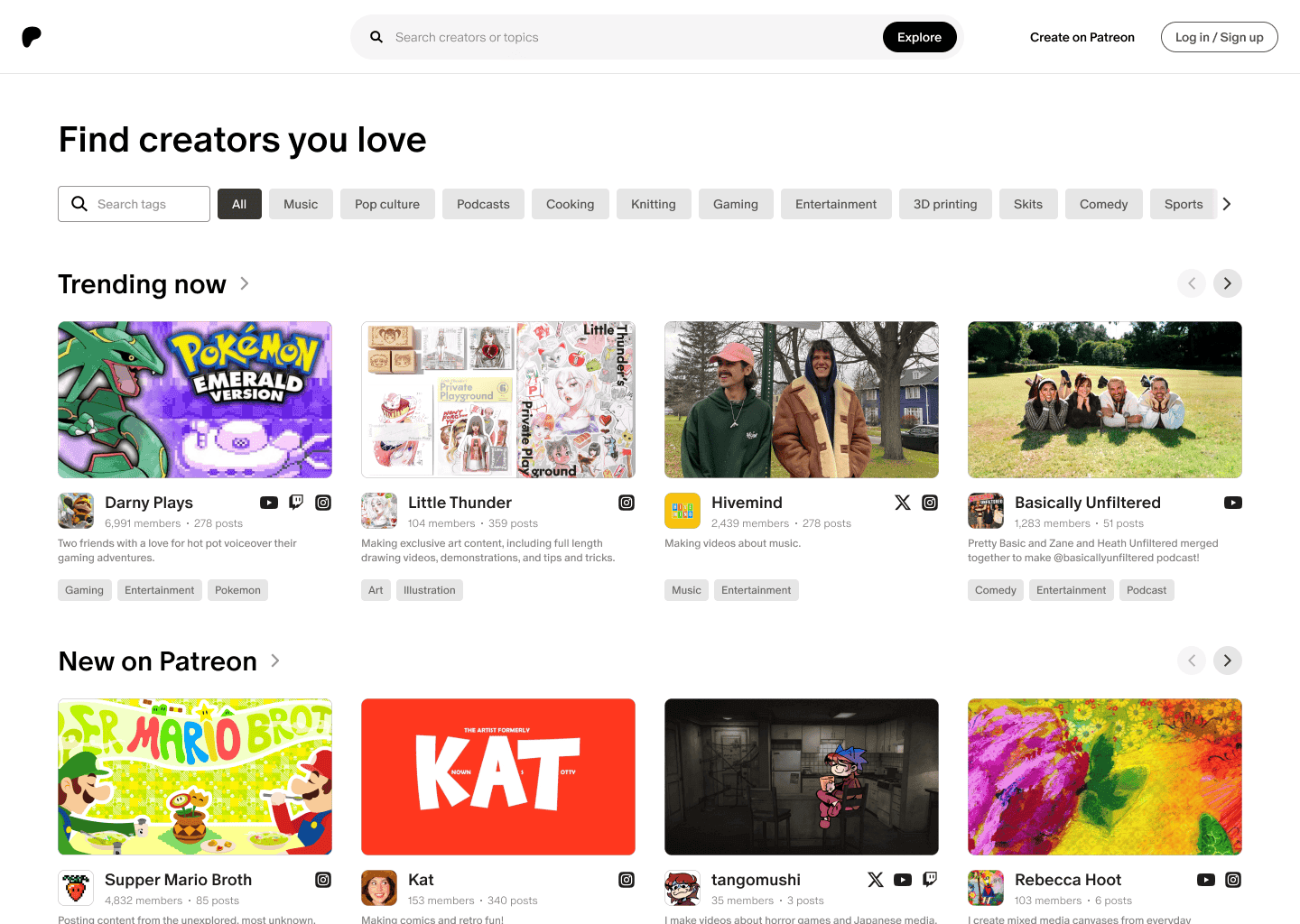
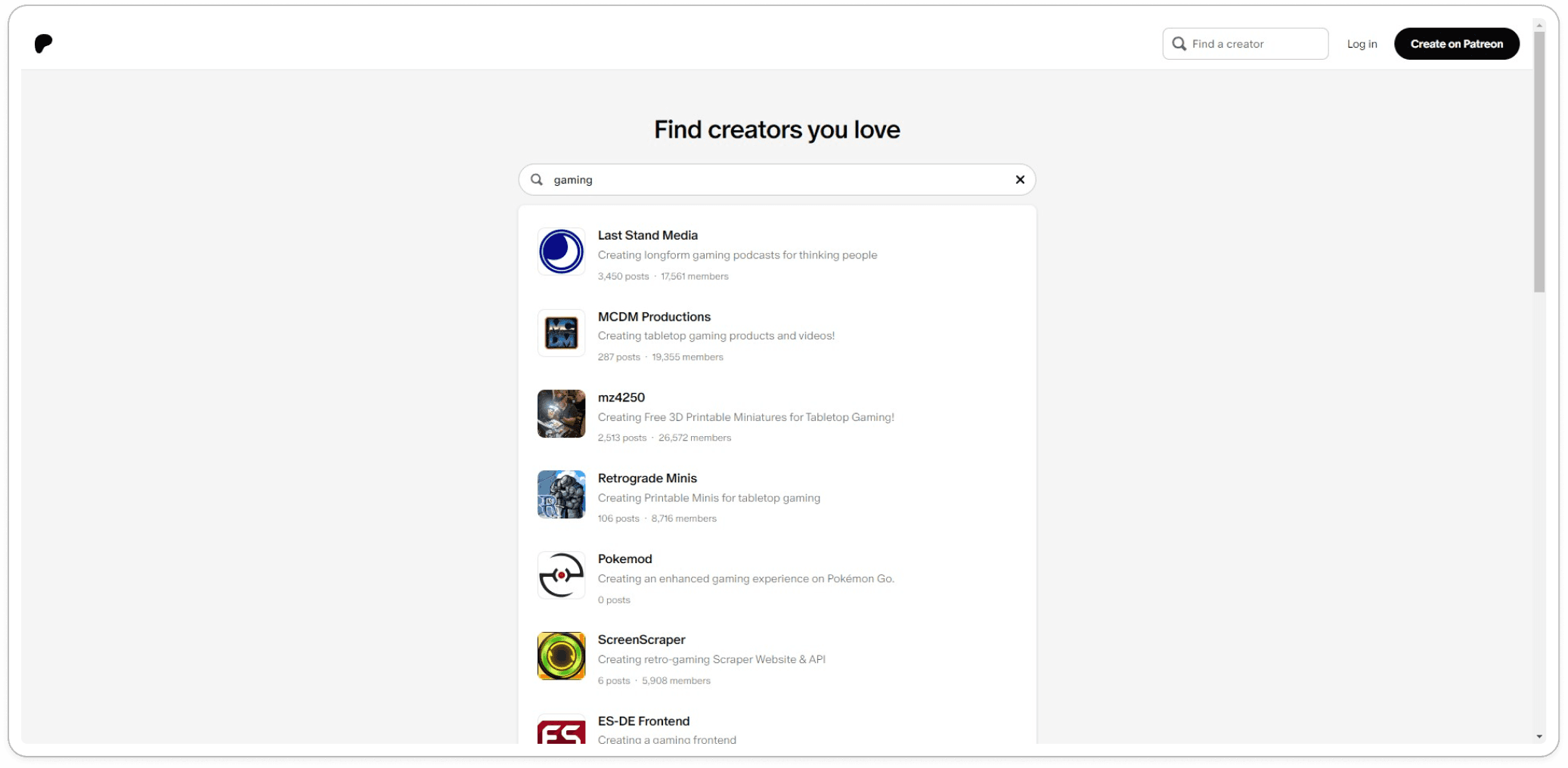
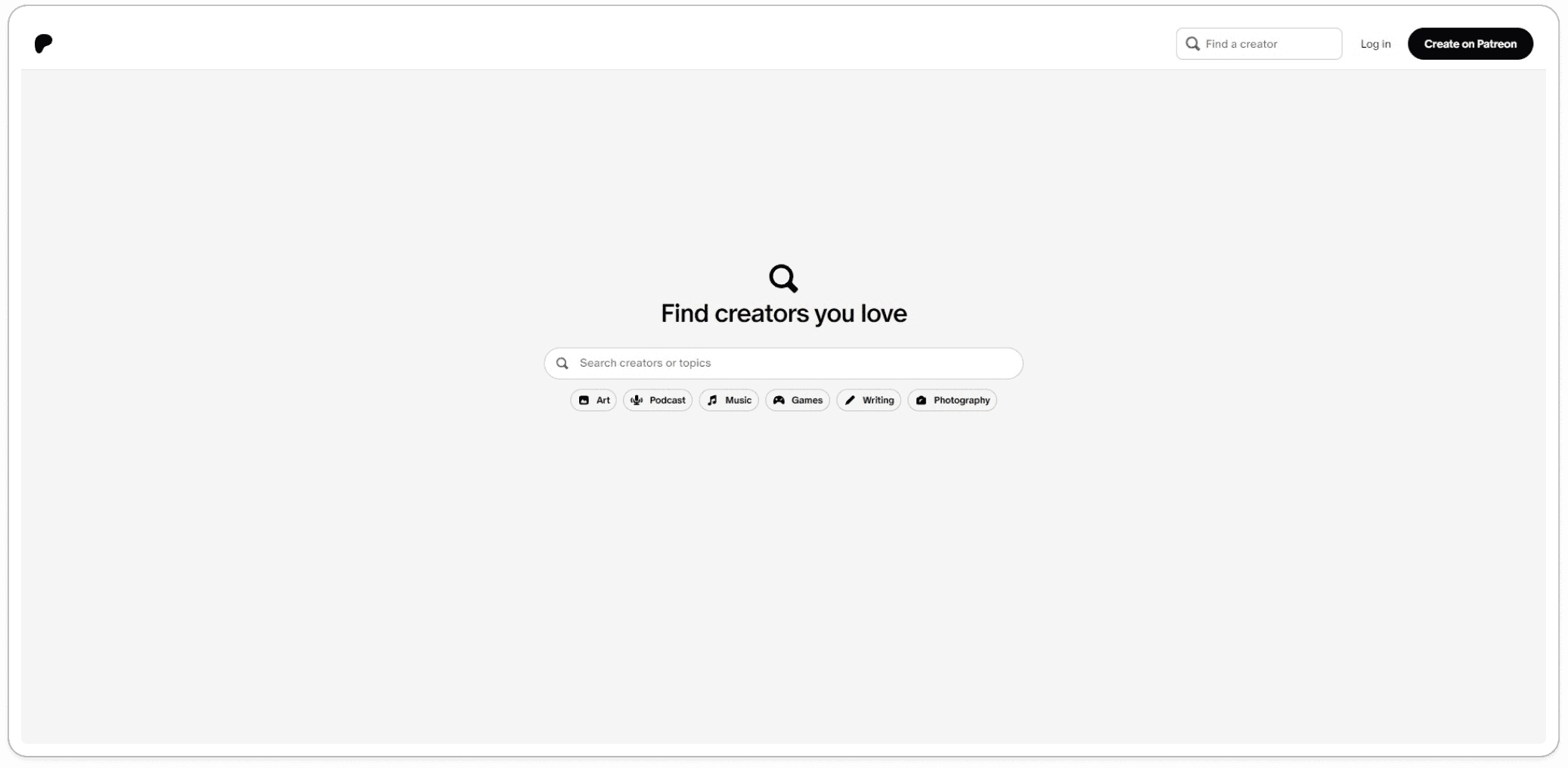

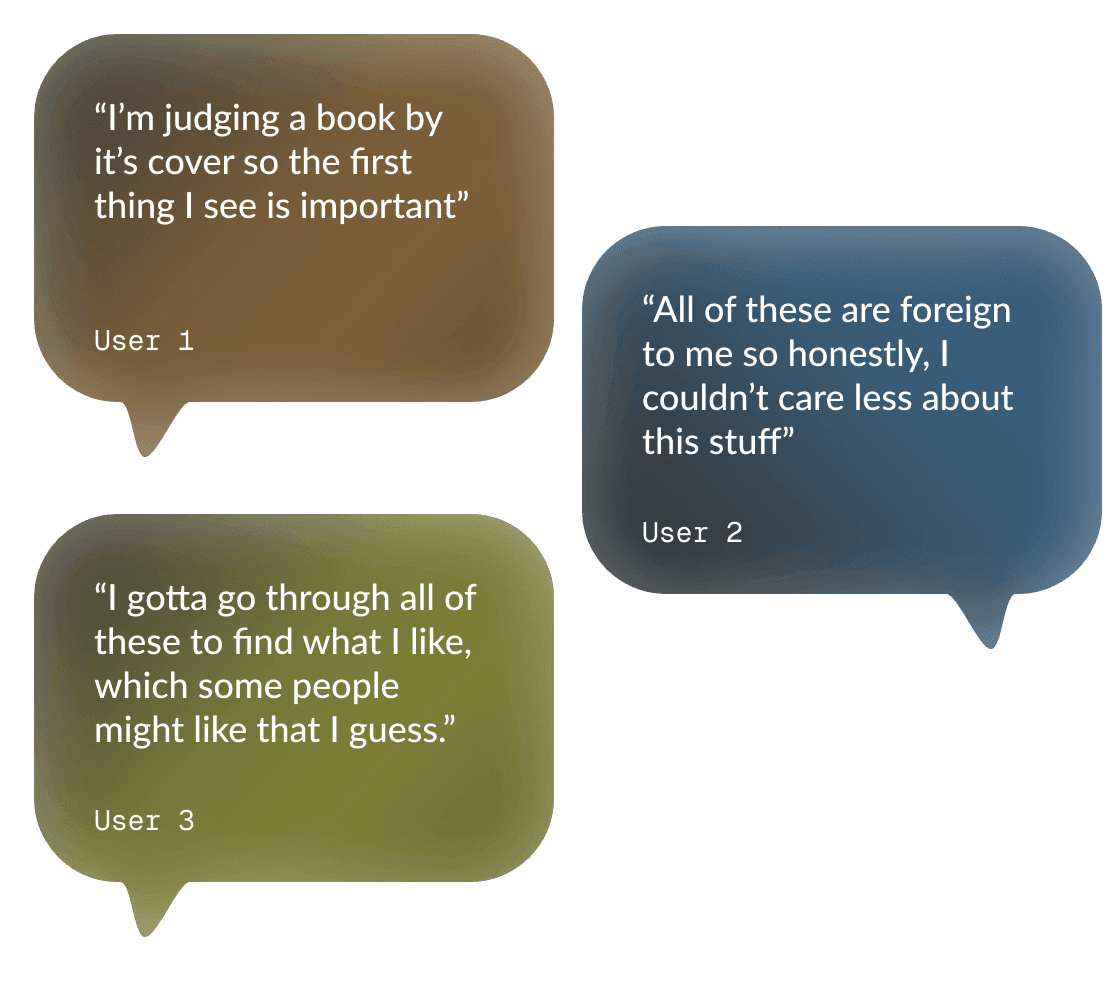
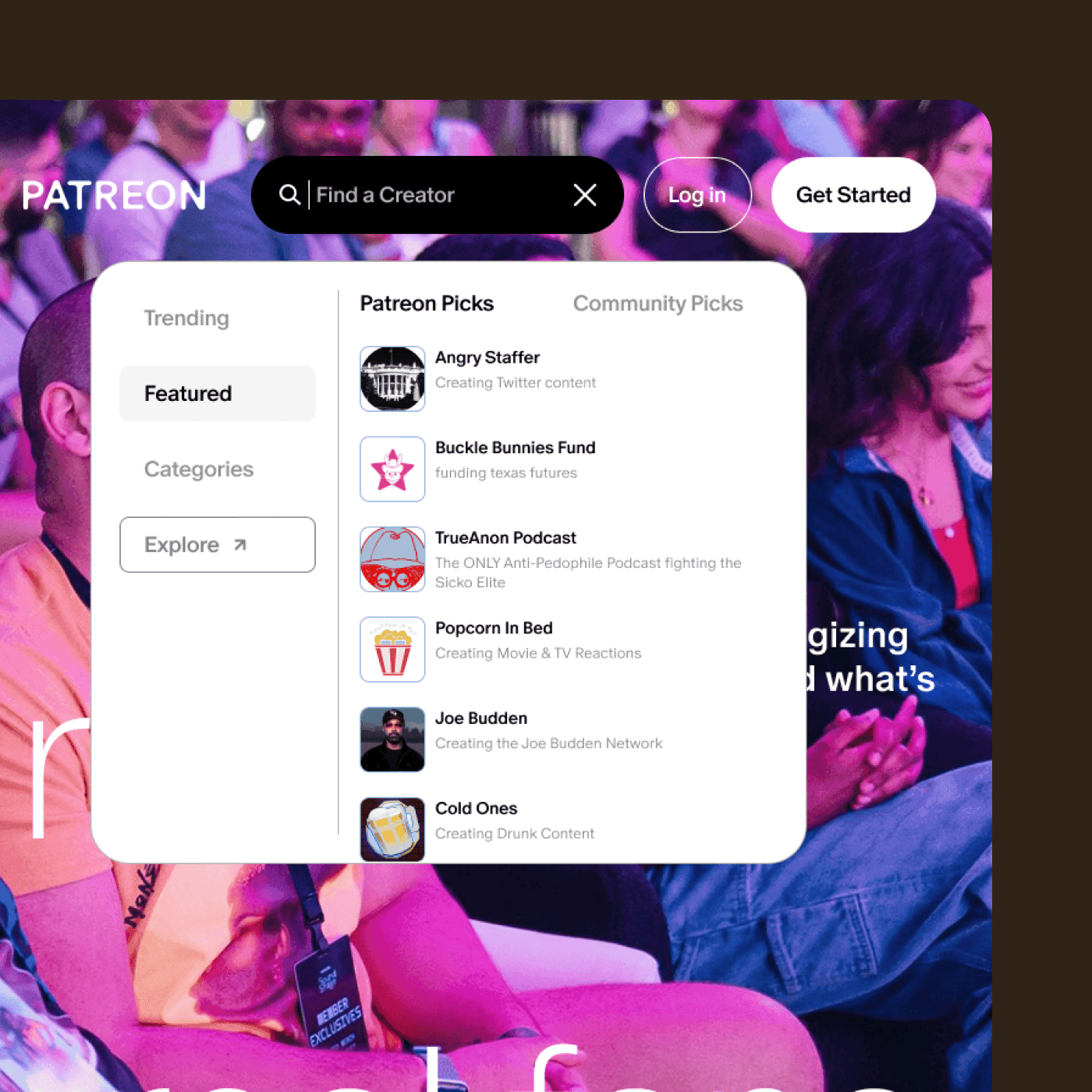
User interviews noted the lack of search support when users go to the search bar. We wanted to provide a more robust experience where we handle the high-friction task of creating momentum and give users multiple entry points to explore.
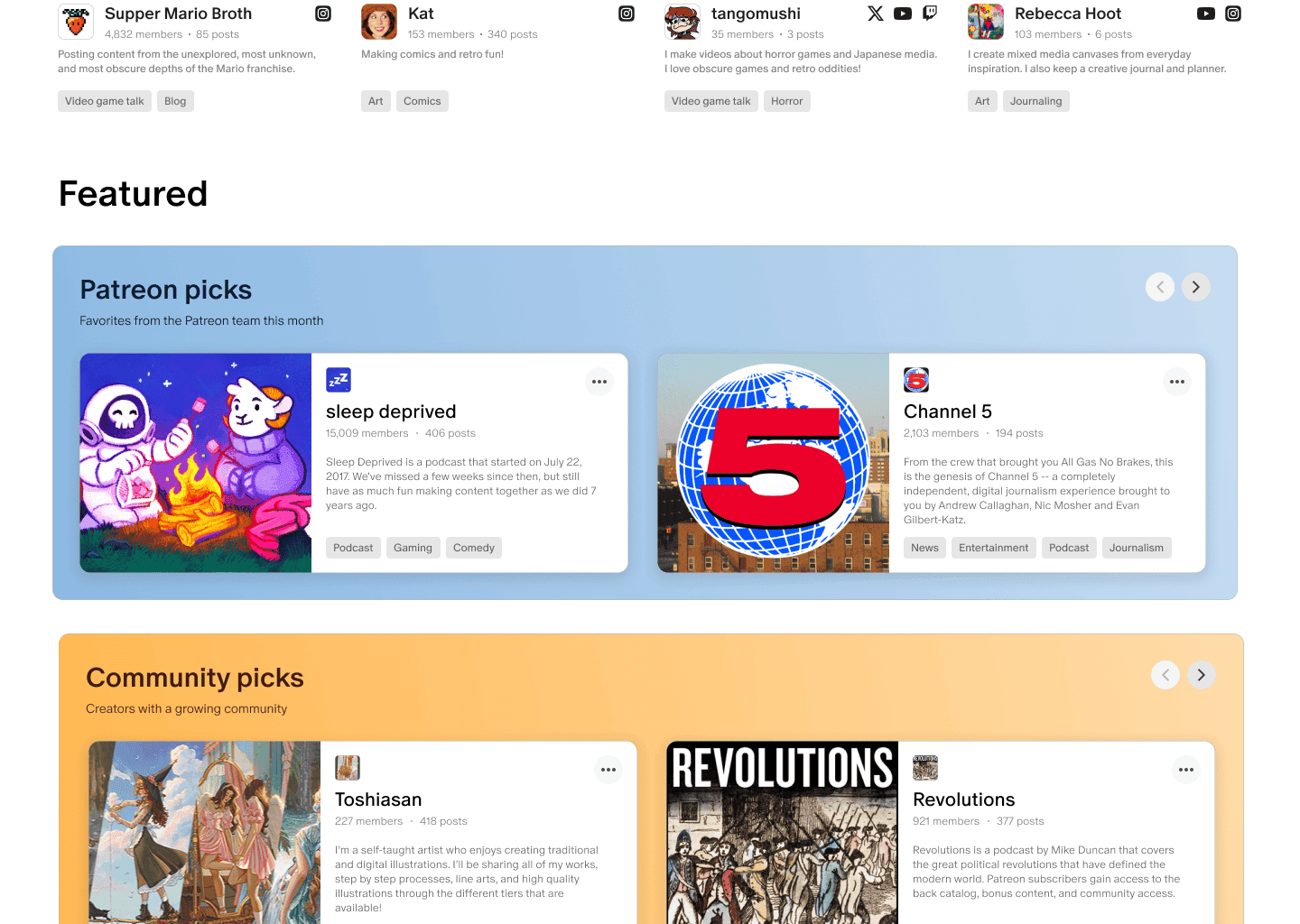
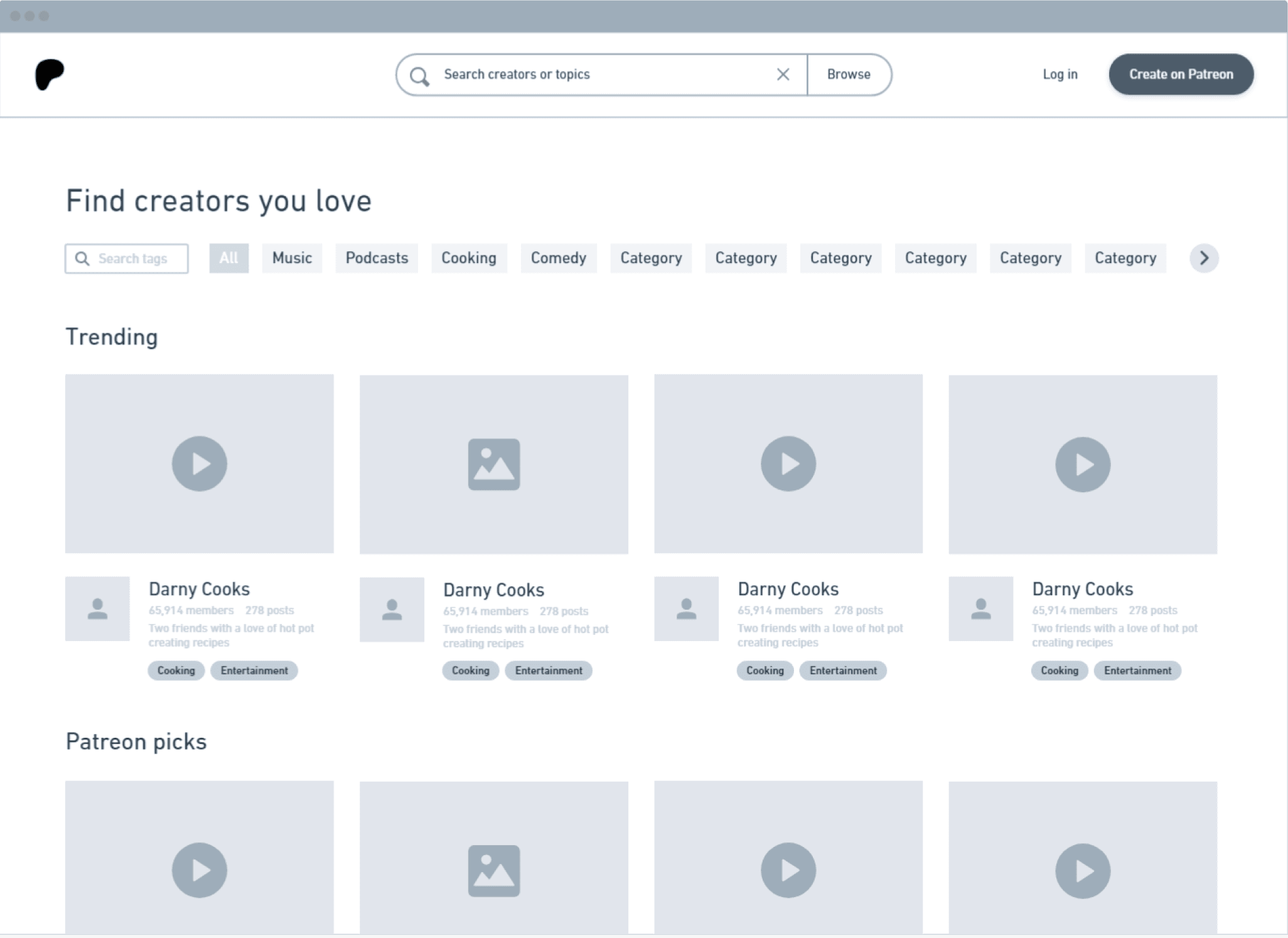
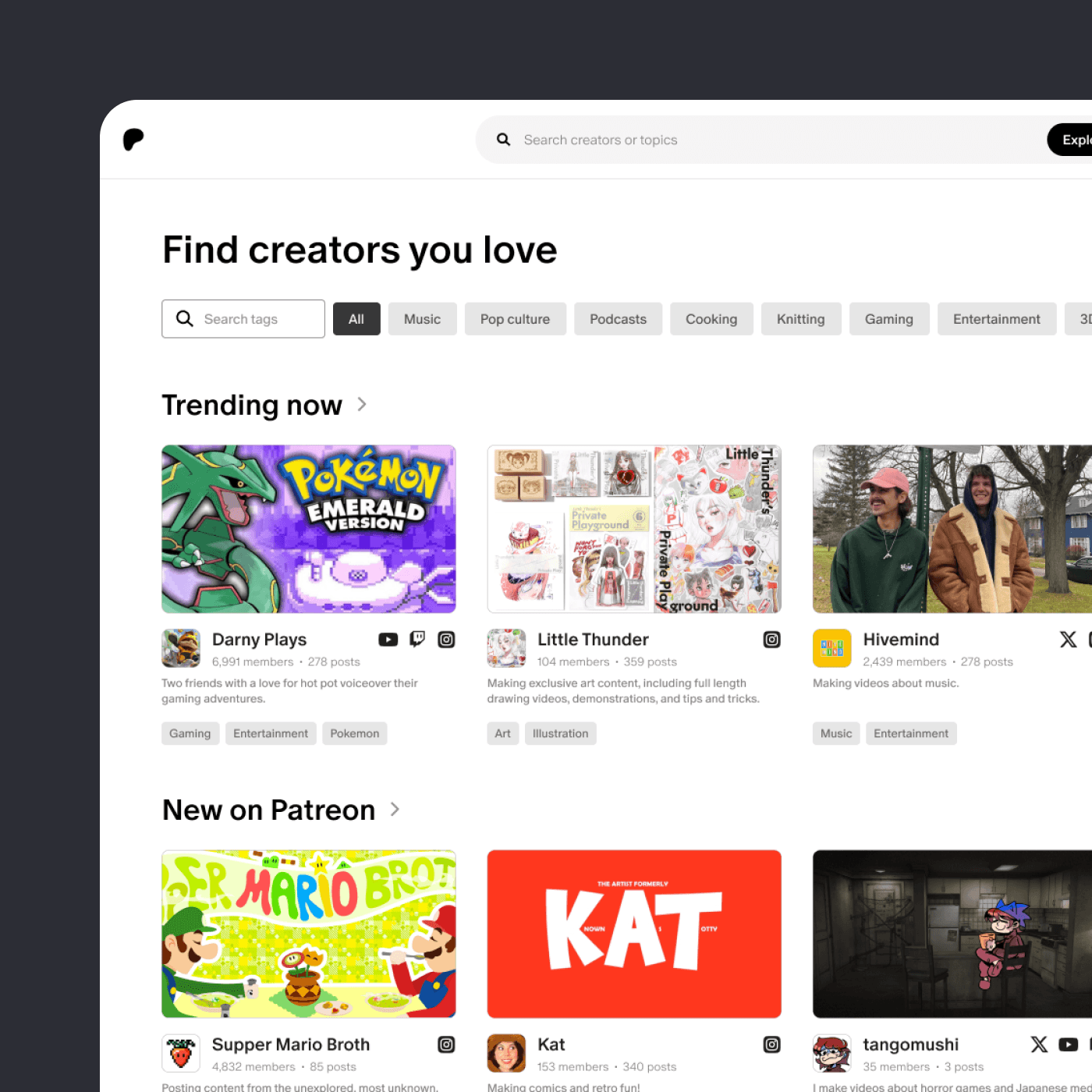
In the previous explore flow, users didn't know what to make of the creator profiles being shown unless they click in. We removed this friction by supplying the user with context and category tags in an easy to scan way.
Helping users discover their way.
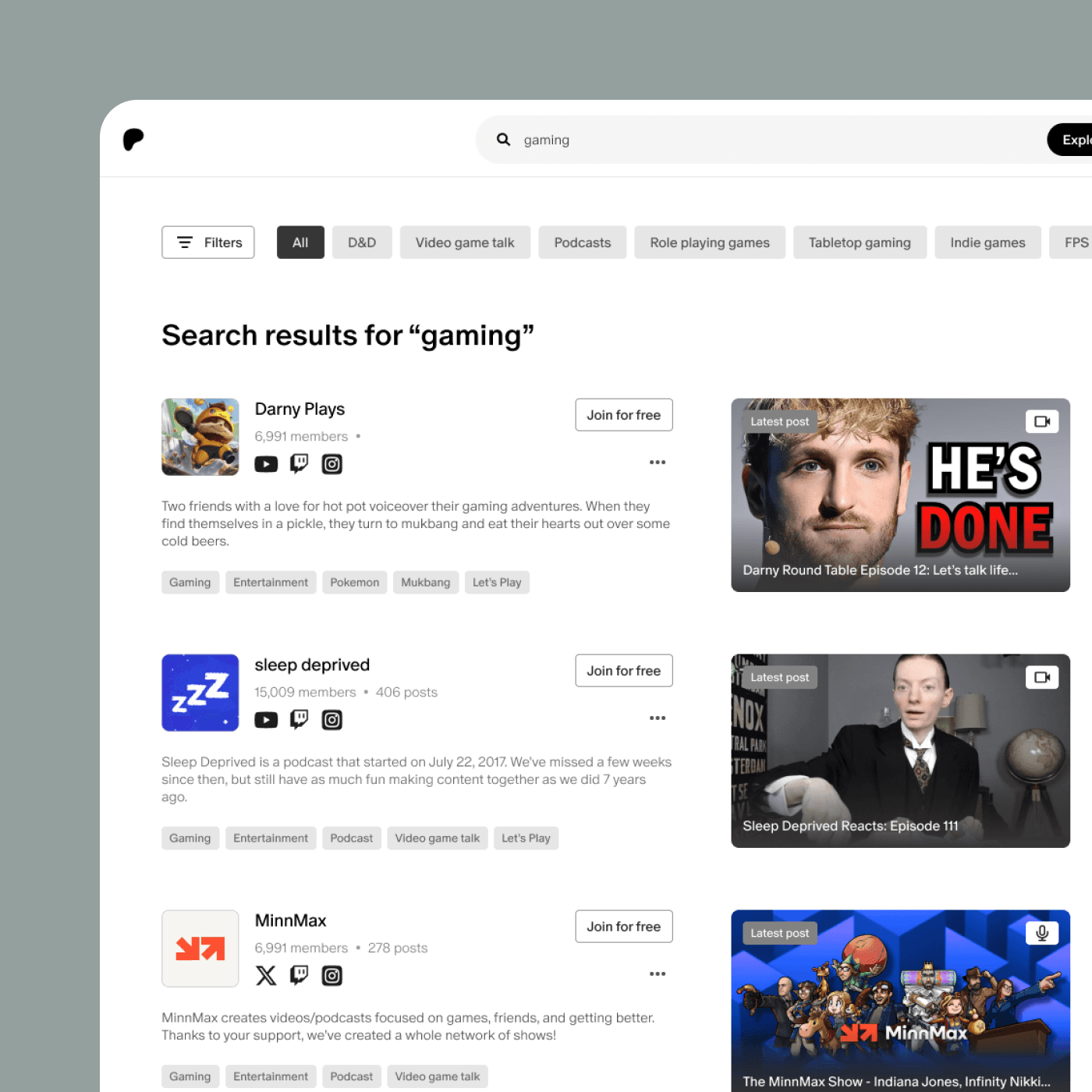
If users use the search bar, they typically have an idea of what they're looking for. By leveraging category tags and semantic search, we help users get closer to the things they want to see, rather than getting random profiles that aren't relevant.
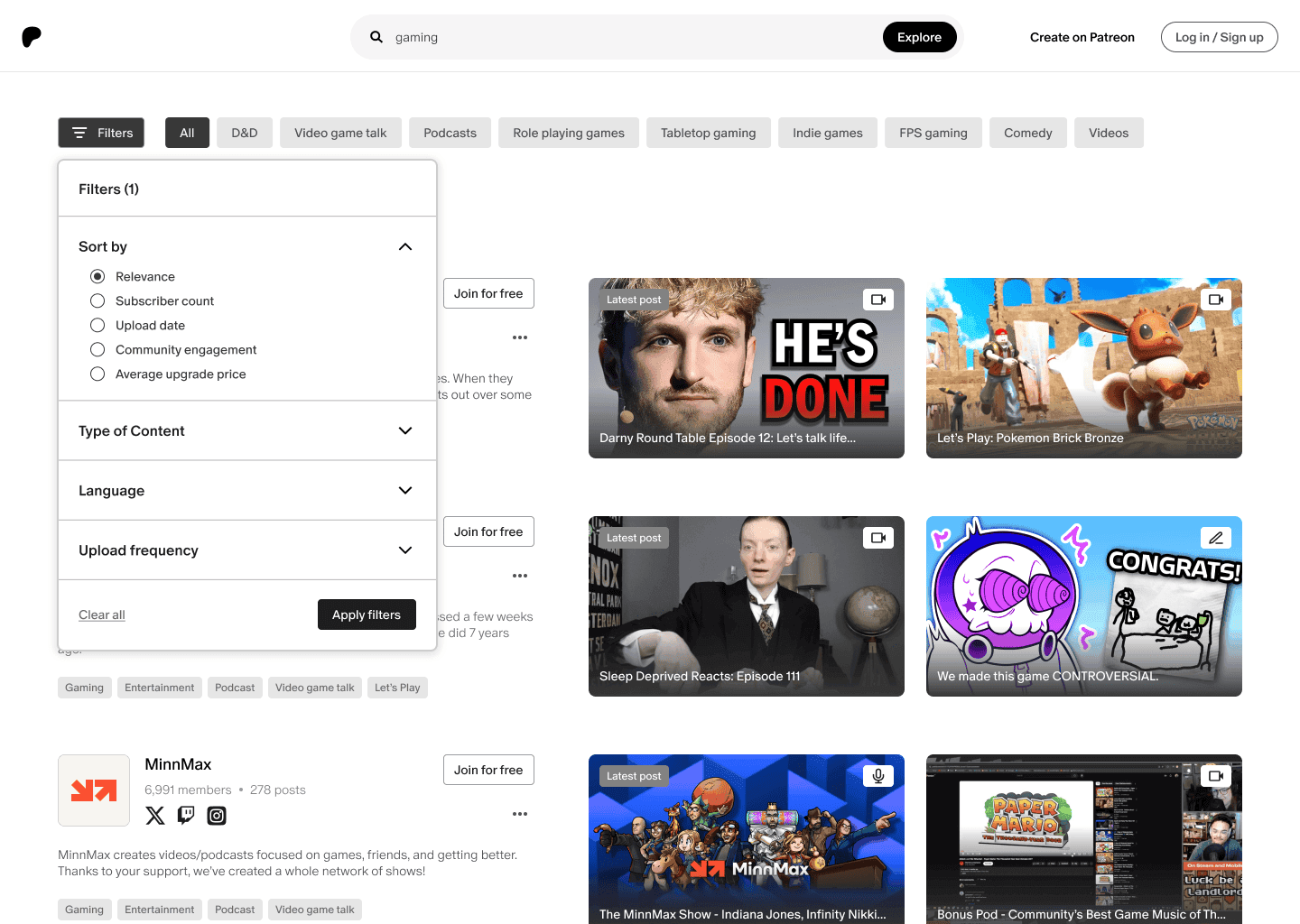
Narrowing the focus.
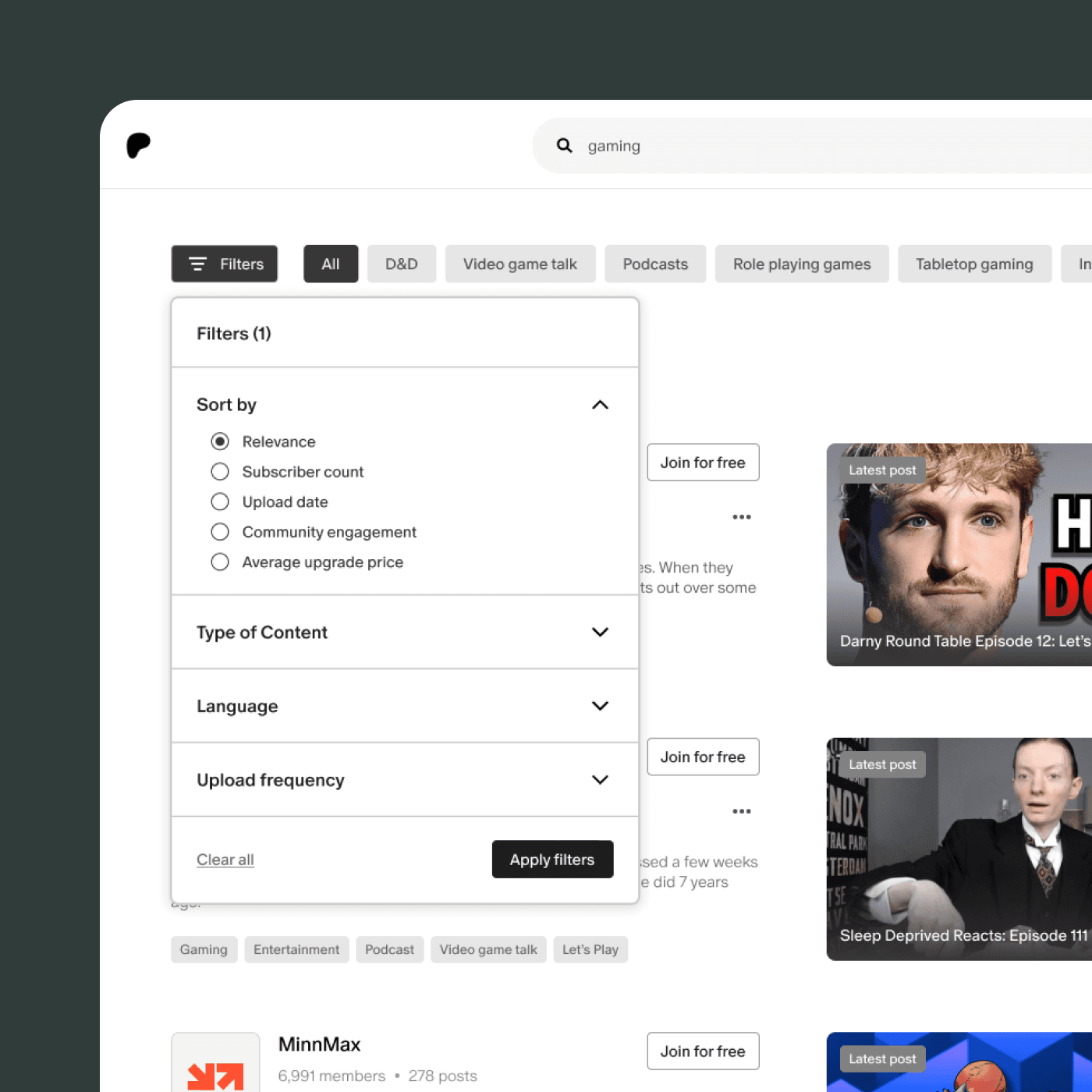
Filters were a highly mentioned feature add during research. This was more of a mental modal "must-have" when it comes to search results that was lacking in the existing Patreon design. Not only does it help users narrow their search, but it also elevates trust in the overall experience, which is crucial in a paid subscription platform like Patreon.
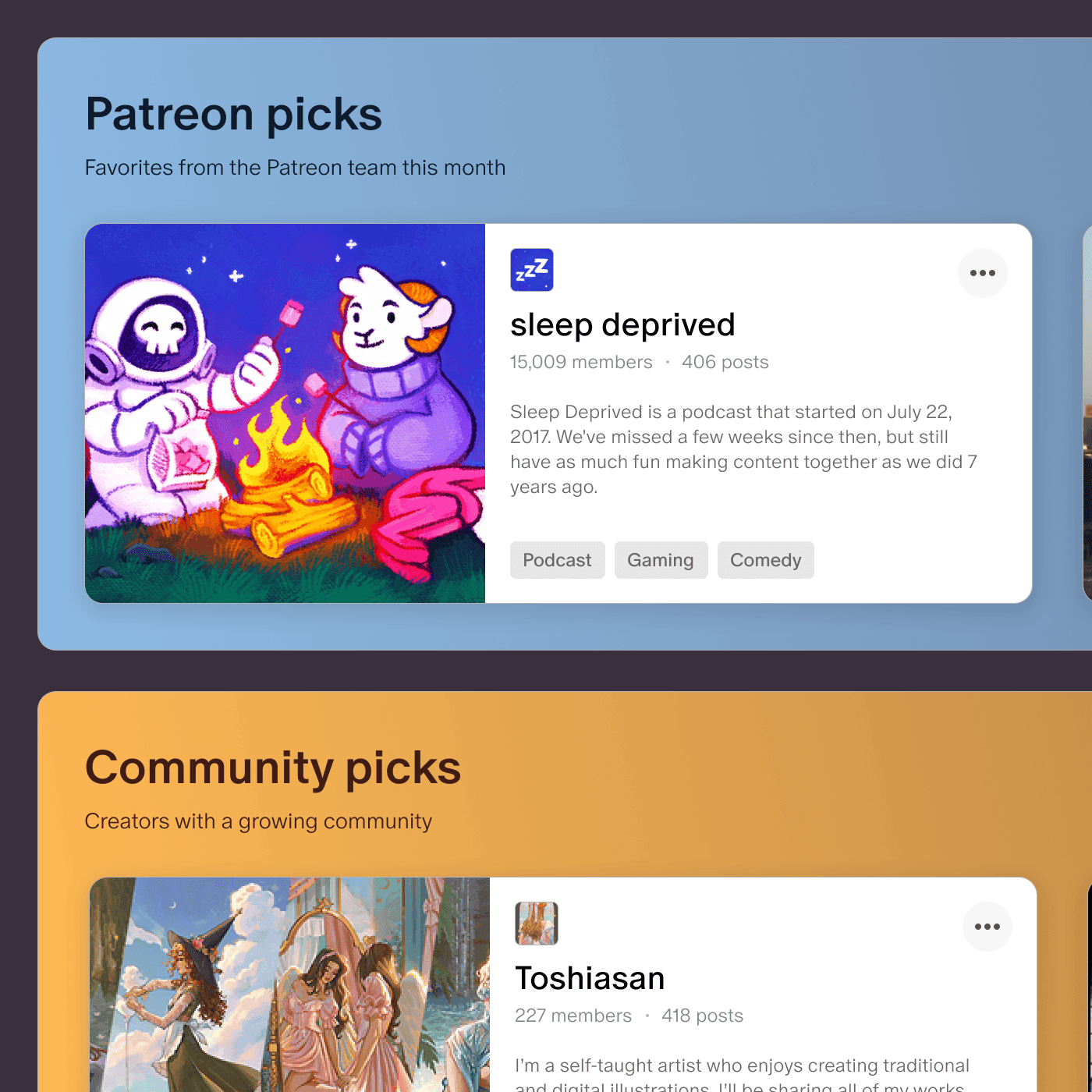
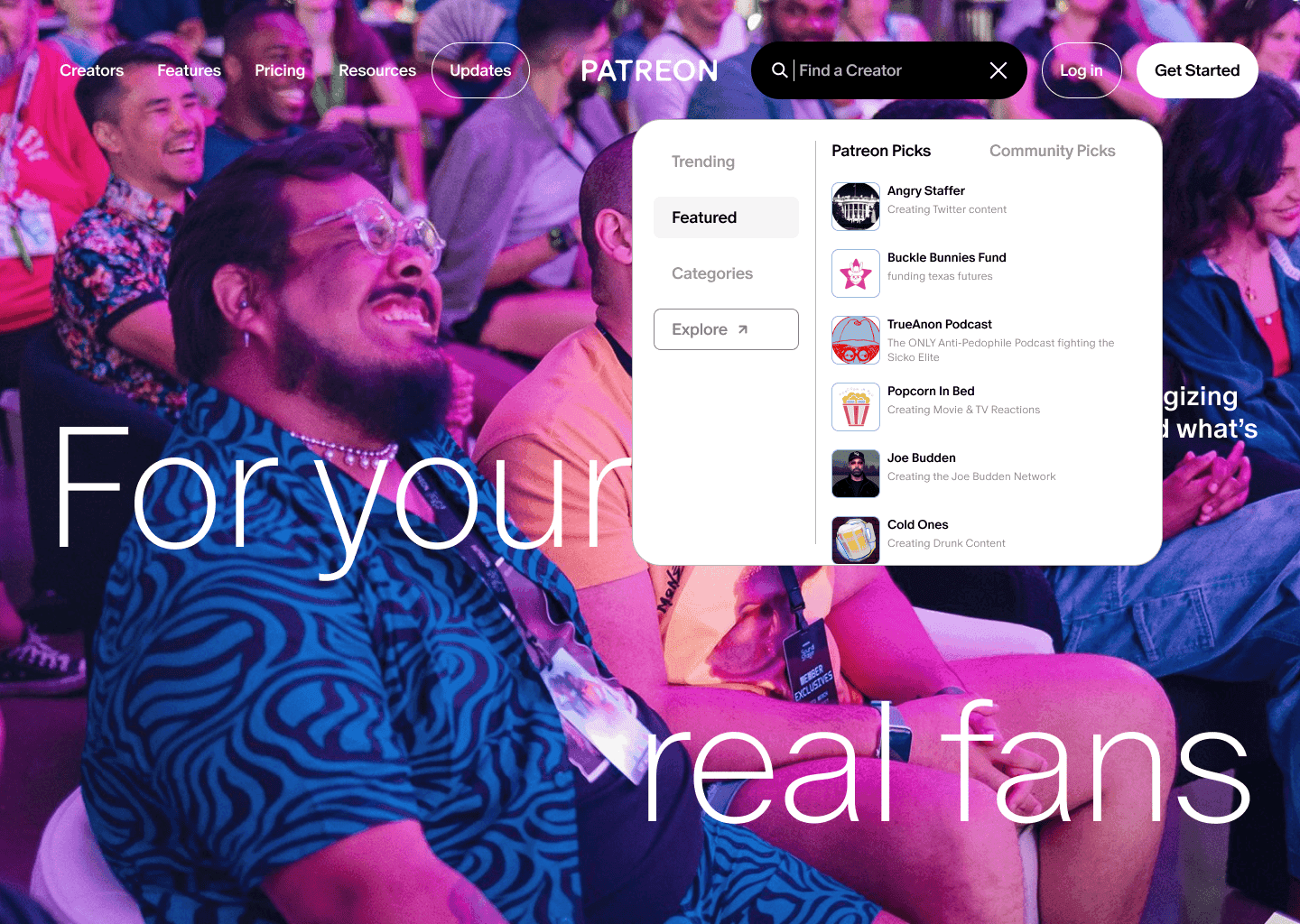
Highlighting our best creators.
For something like an explore feature, it's only right to include a featured section. This gives fans additional exploring entry points and context, and allows Patreon to showcase the dedicated creators on the platform.
1
2
More frequent early testing.
Due to tight time constraints, we unfortunately didn't get to conduct early user usability testing or validation, which would have helped catch and blind spots early and evolve our concepts with more confidence. Next time, I would make sure early concepts get tested, even if quick and rough, especially for larger-scale projects like this, where there are many nuances around recommendations, user retention, and ultimately, conversion.
3