
Airbnb is a global platform that connects travelers with unique places to stay. It empowers hosts to monetize their spaces while giving guests a more personal, local alternative to traditional hotels.
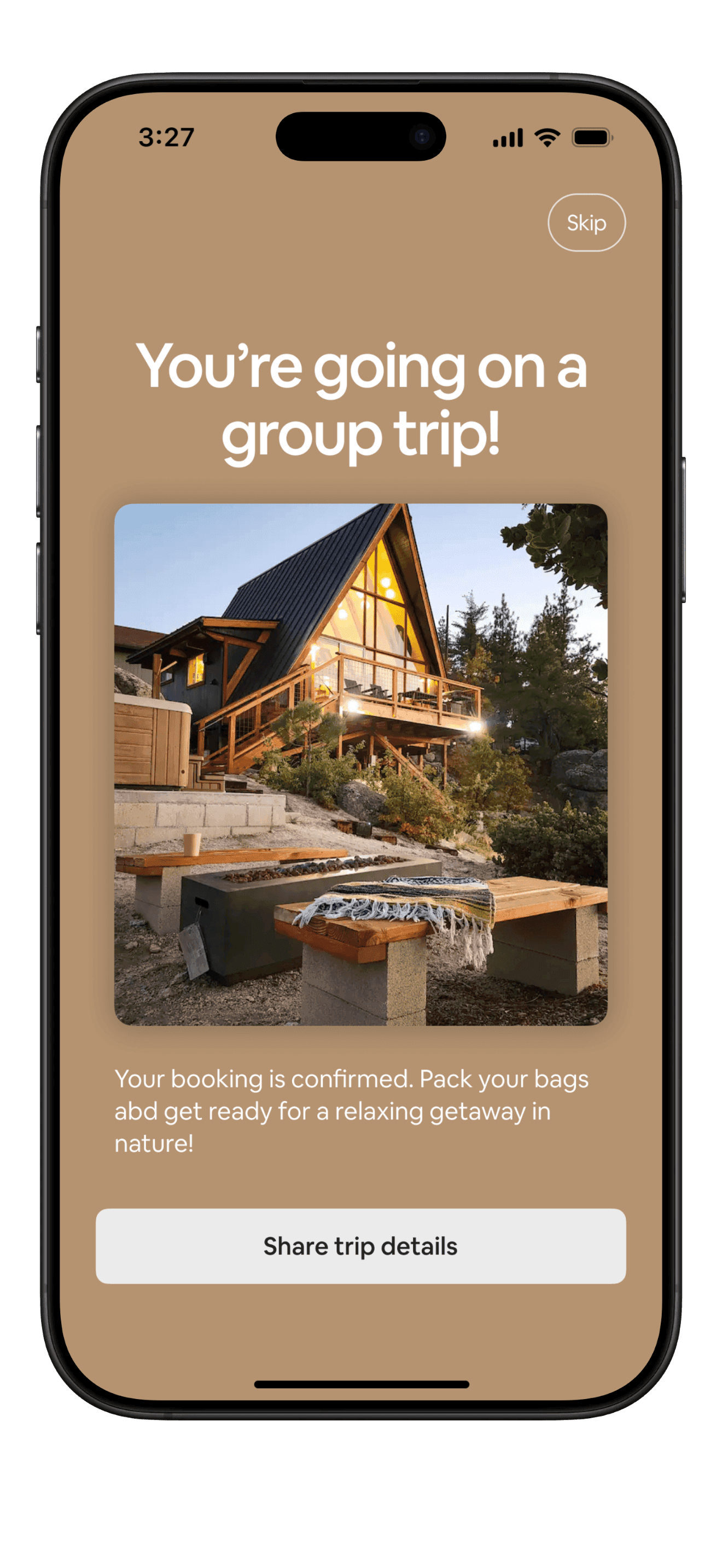
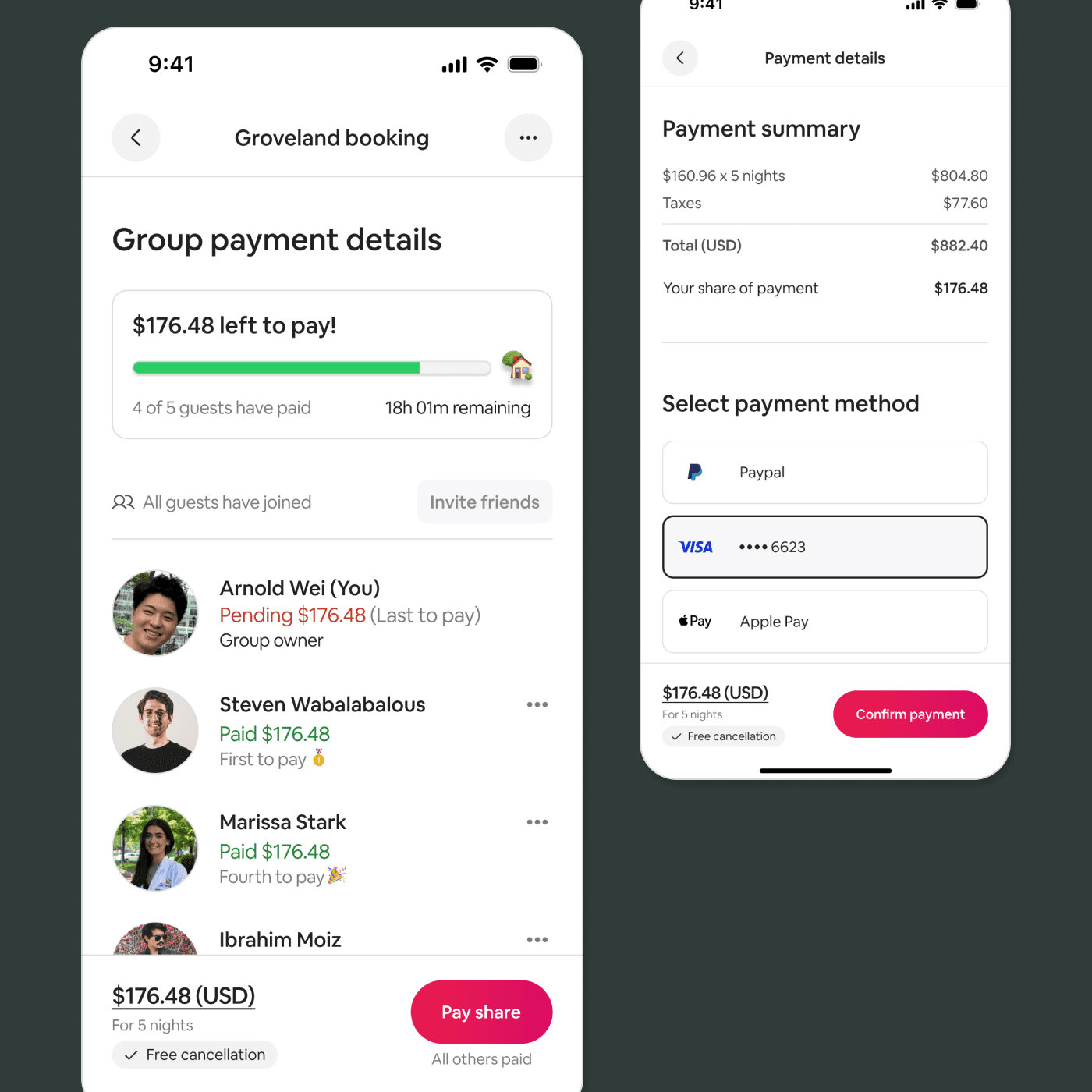
During my design bootcamp, my partner and I were tasked to design a native payment split feature within Airbnb's existing platform (sneak peek below).
Collecting timely payments from group
Coordinating payment methods
Deciding whose card to use for the booking
Lack of transparency around cost splitting and payment
Note: Surveyors were allowed to choose more than 1 answer.


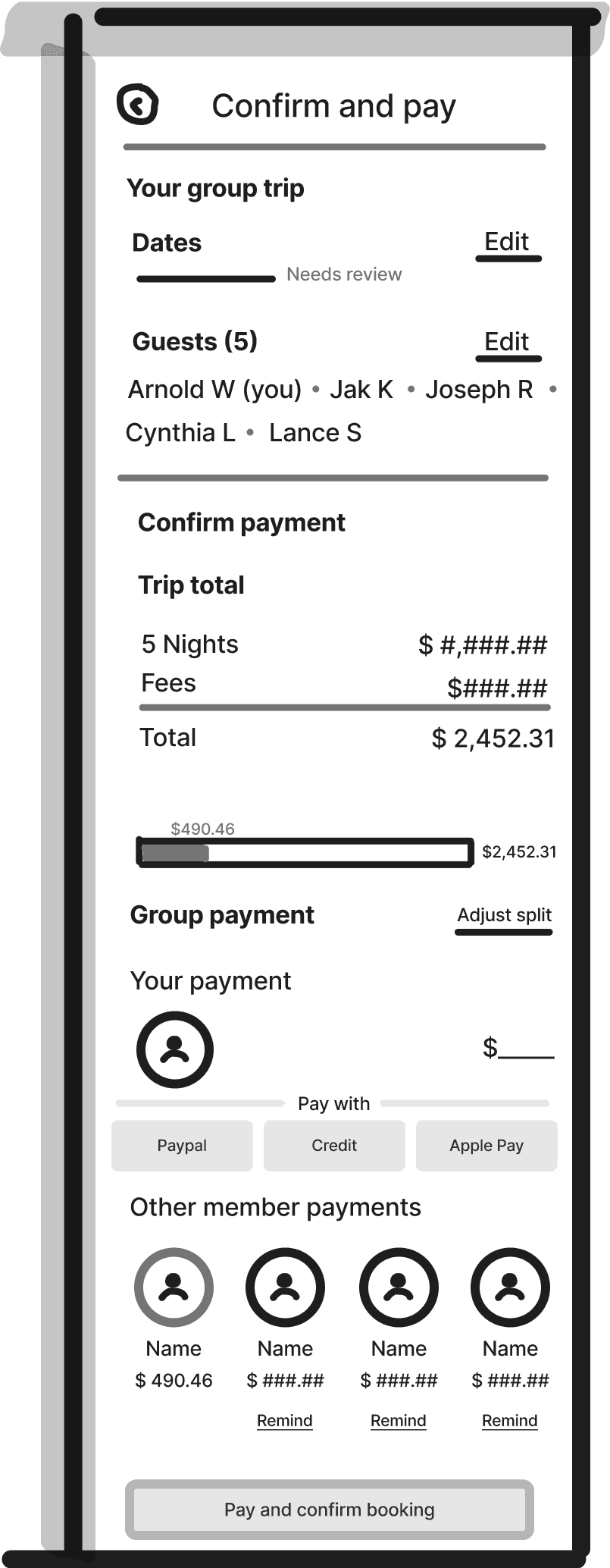
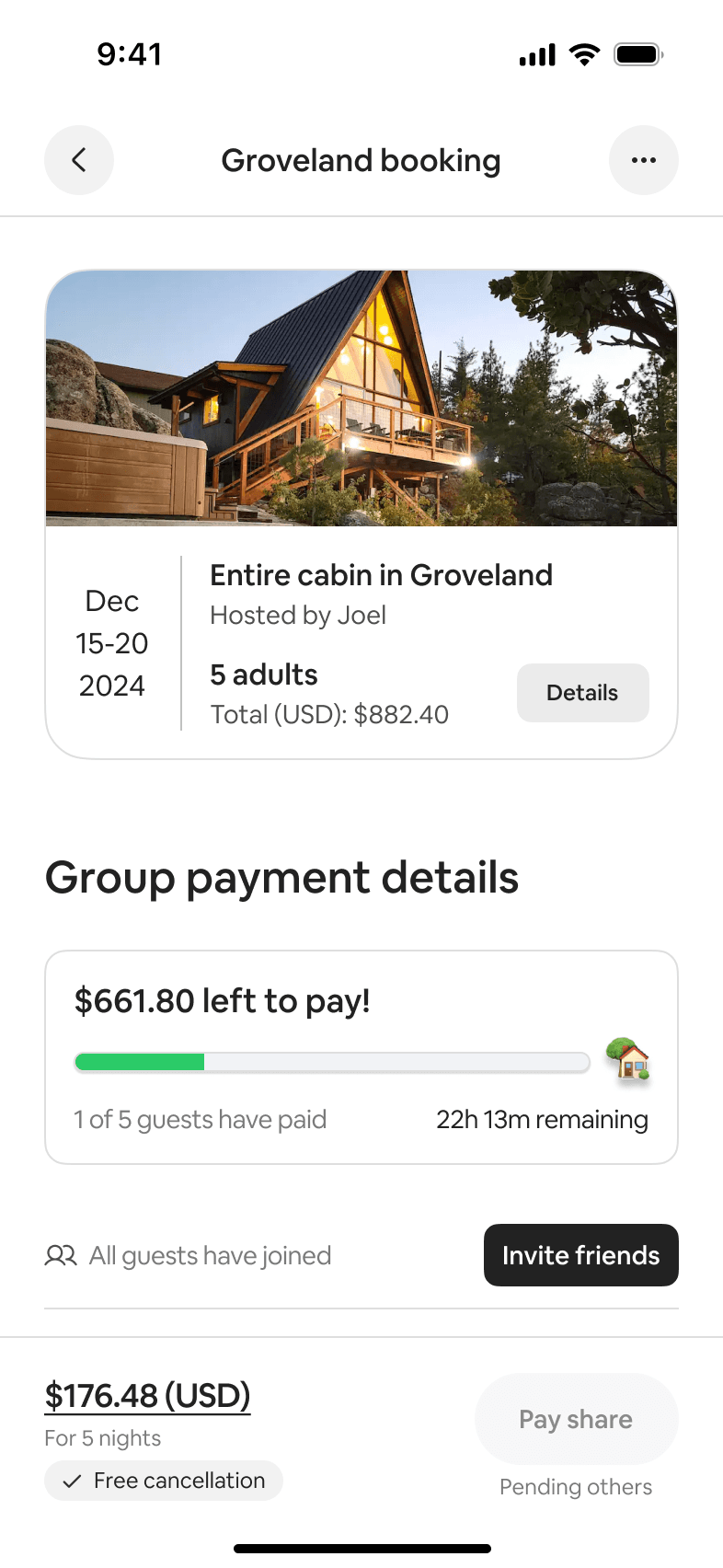
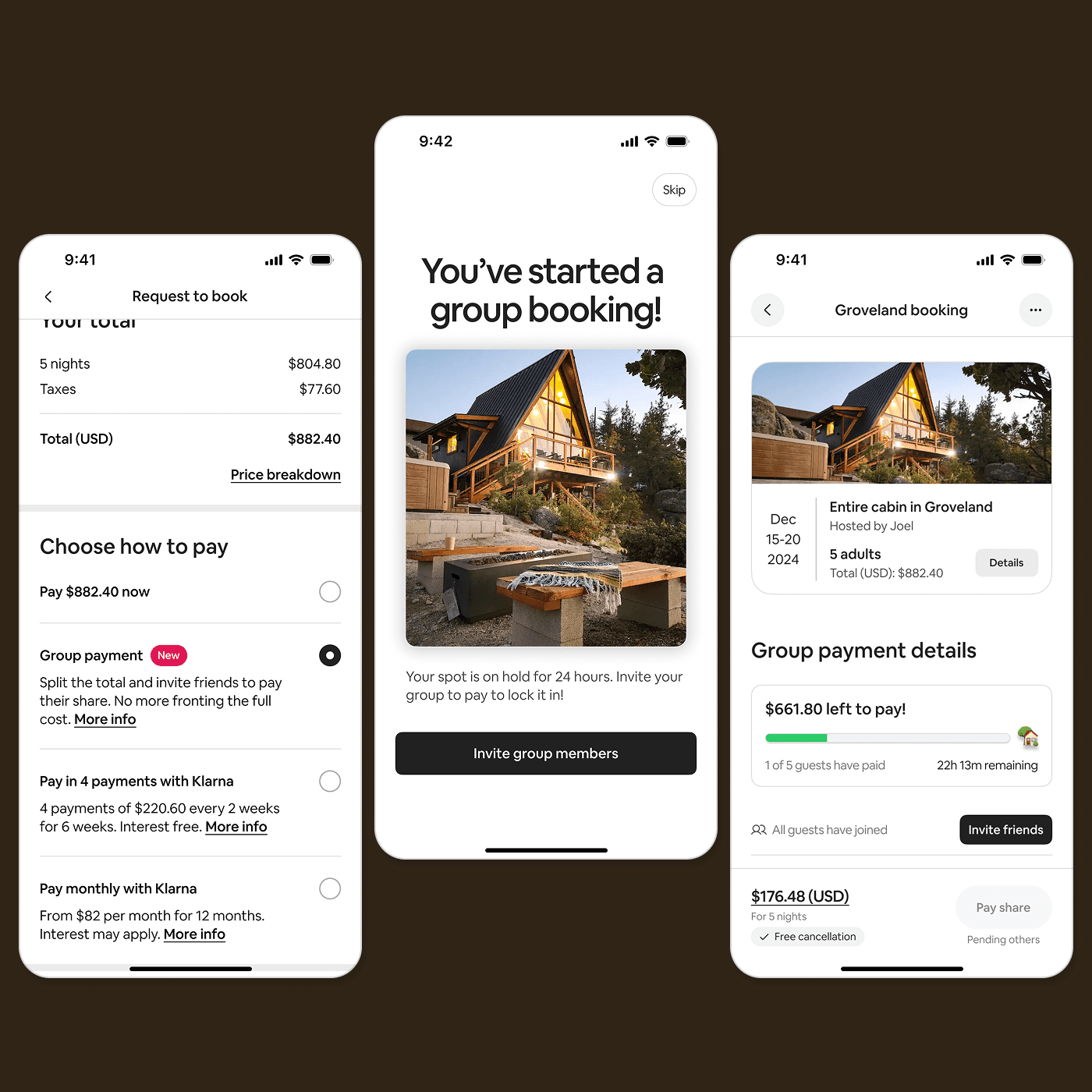
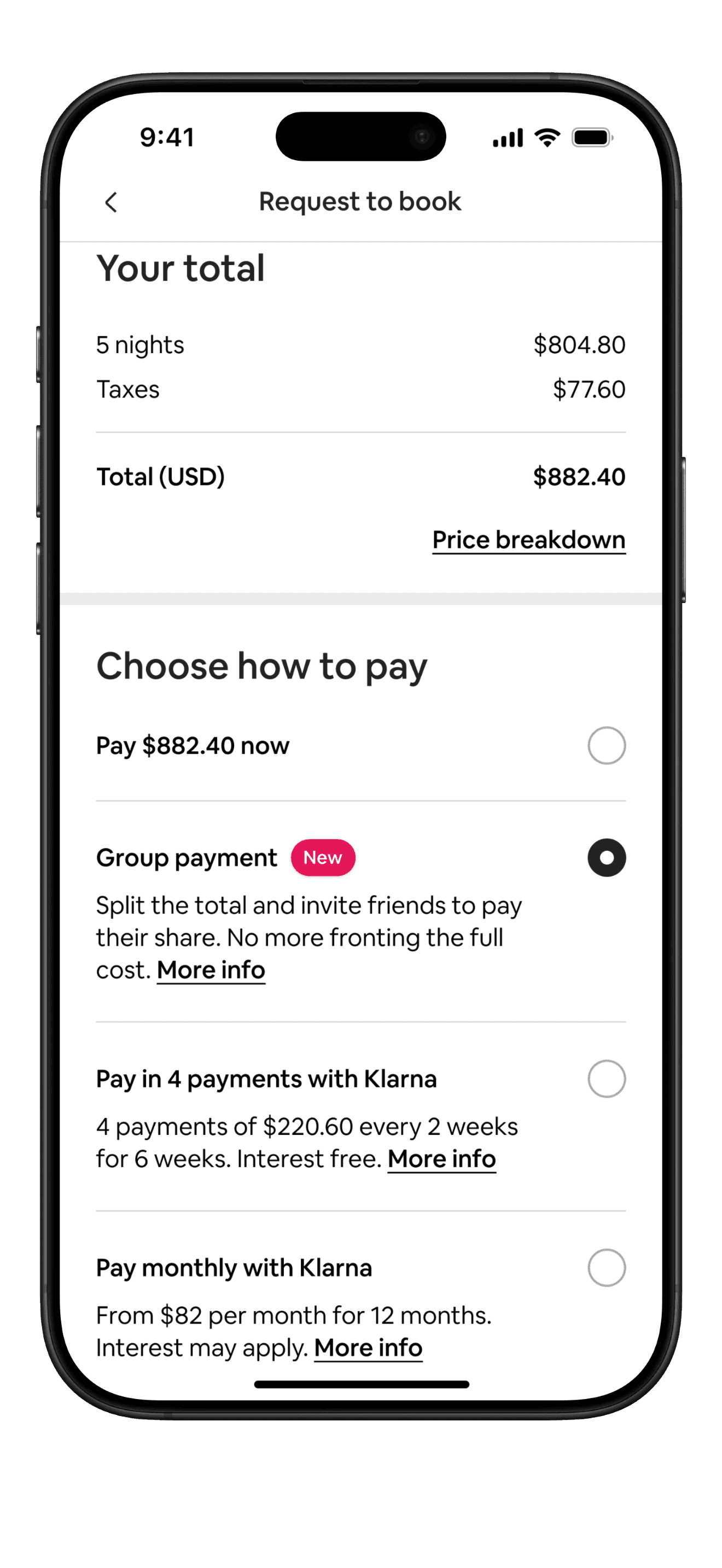
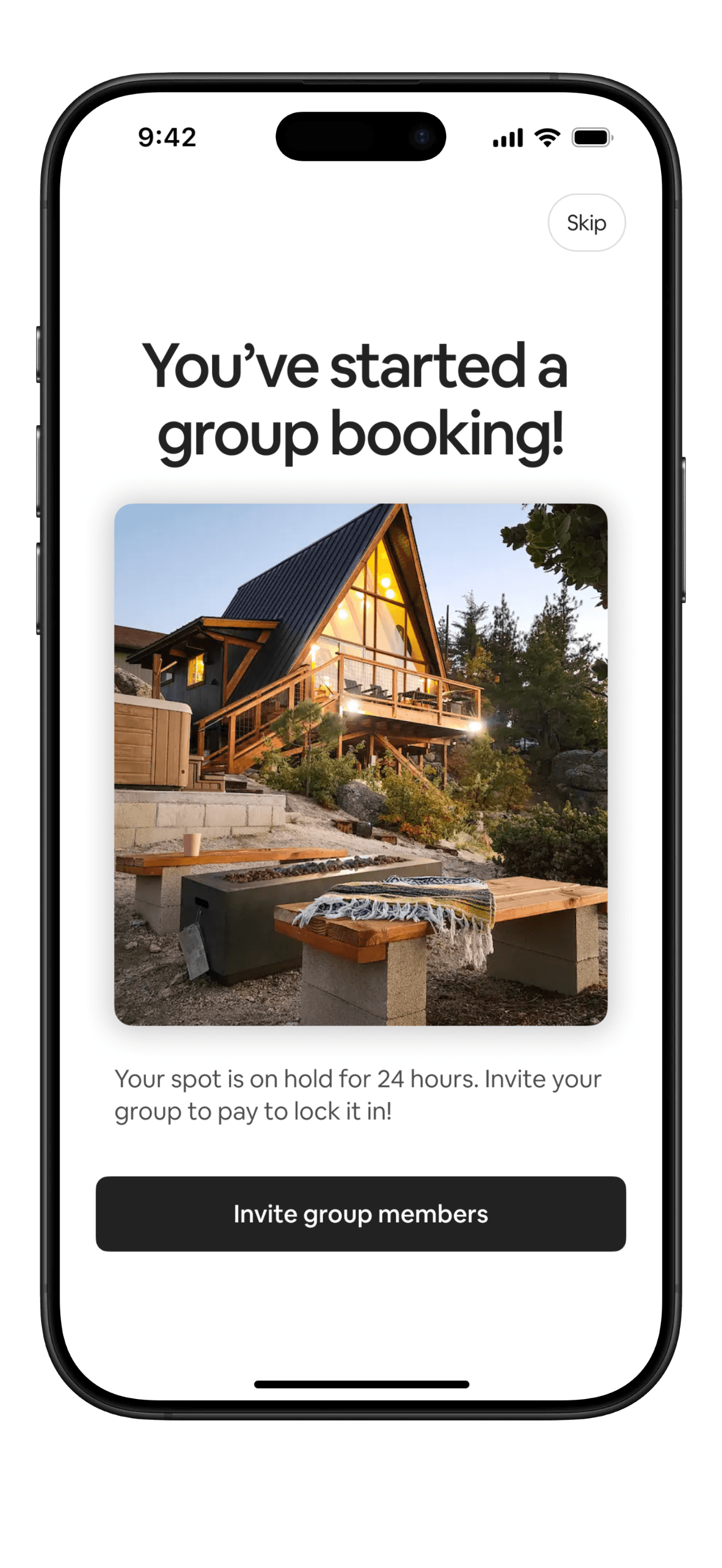
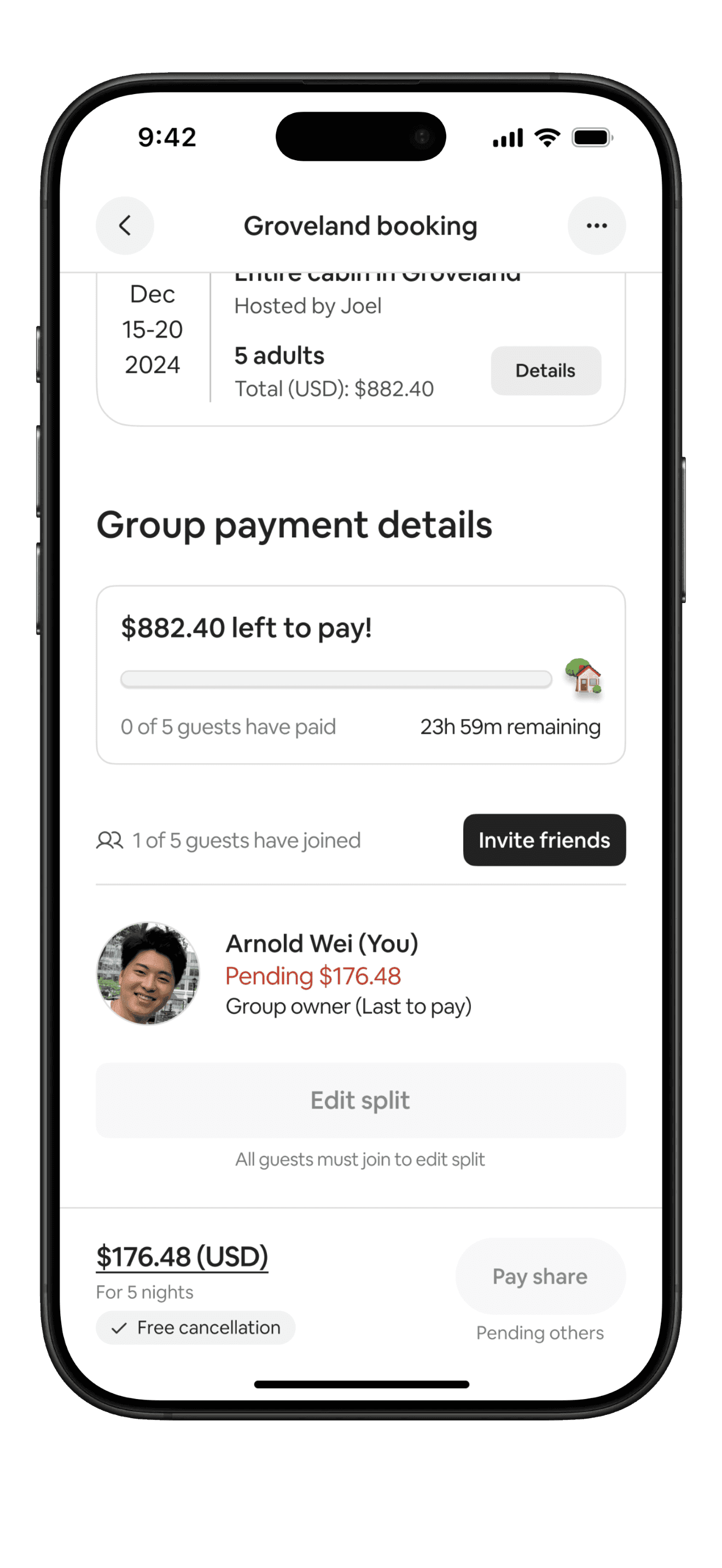
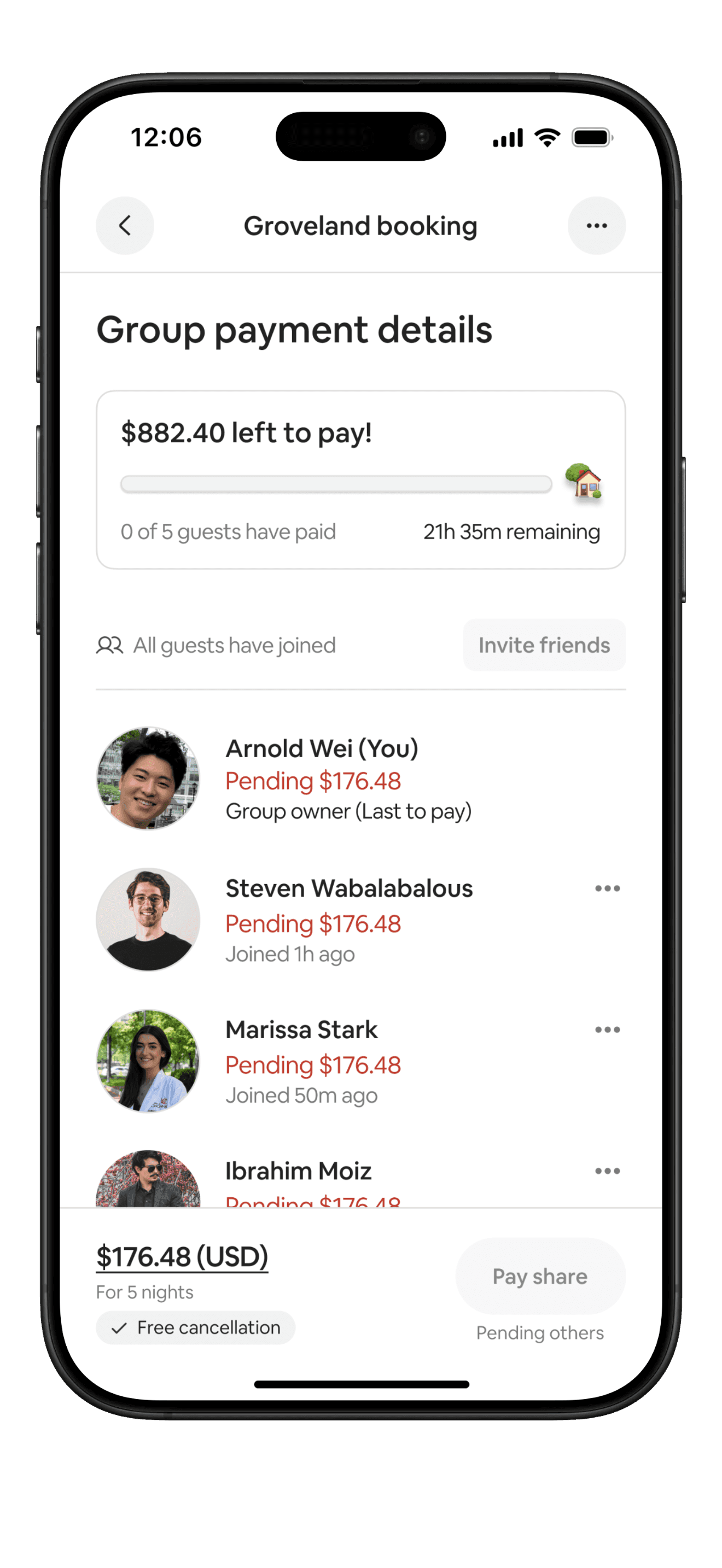
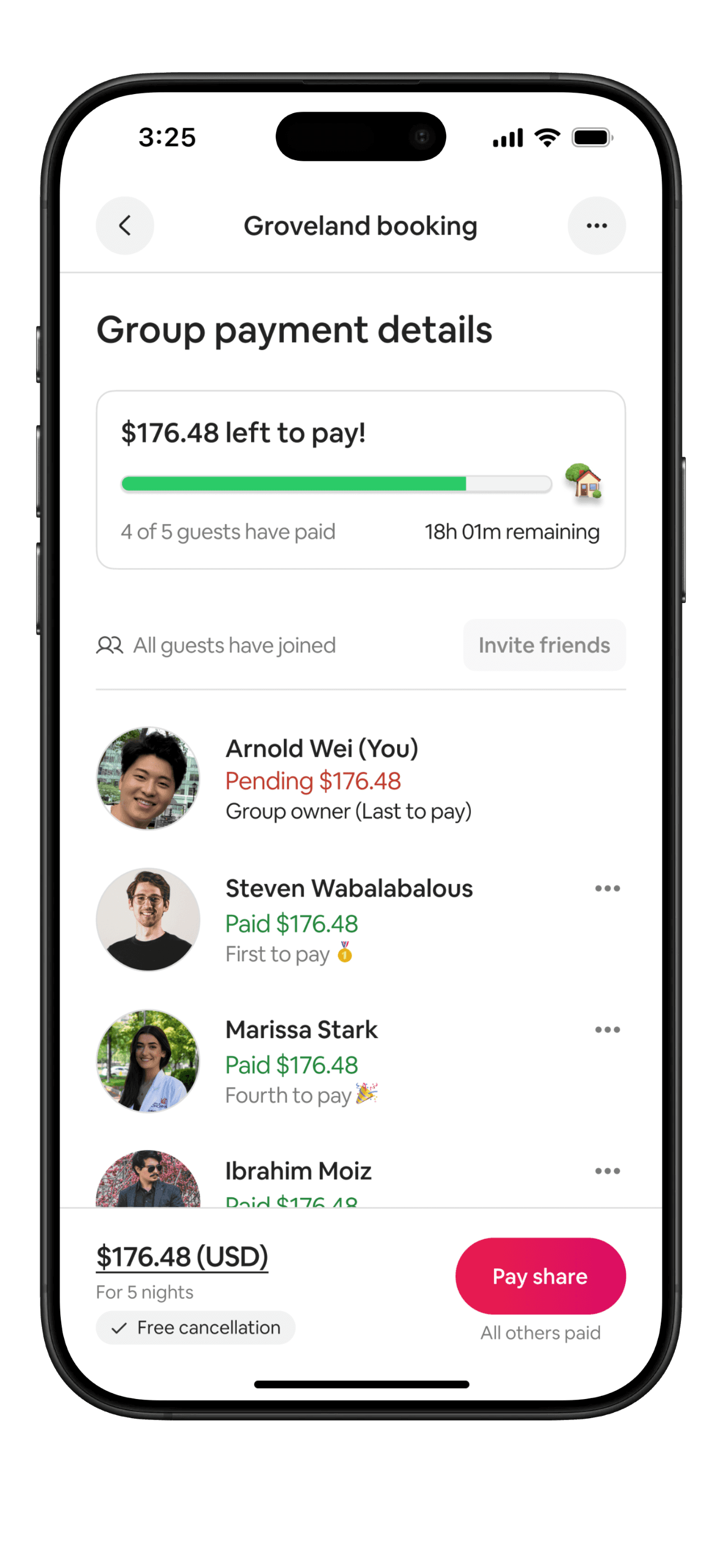
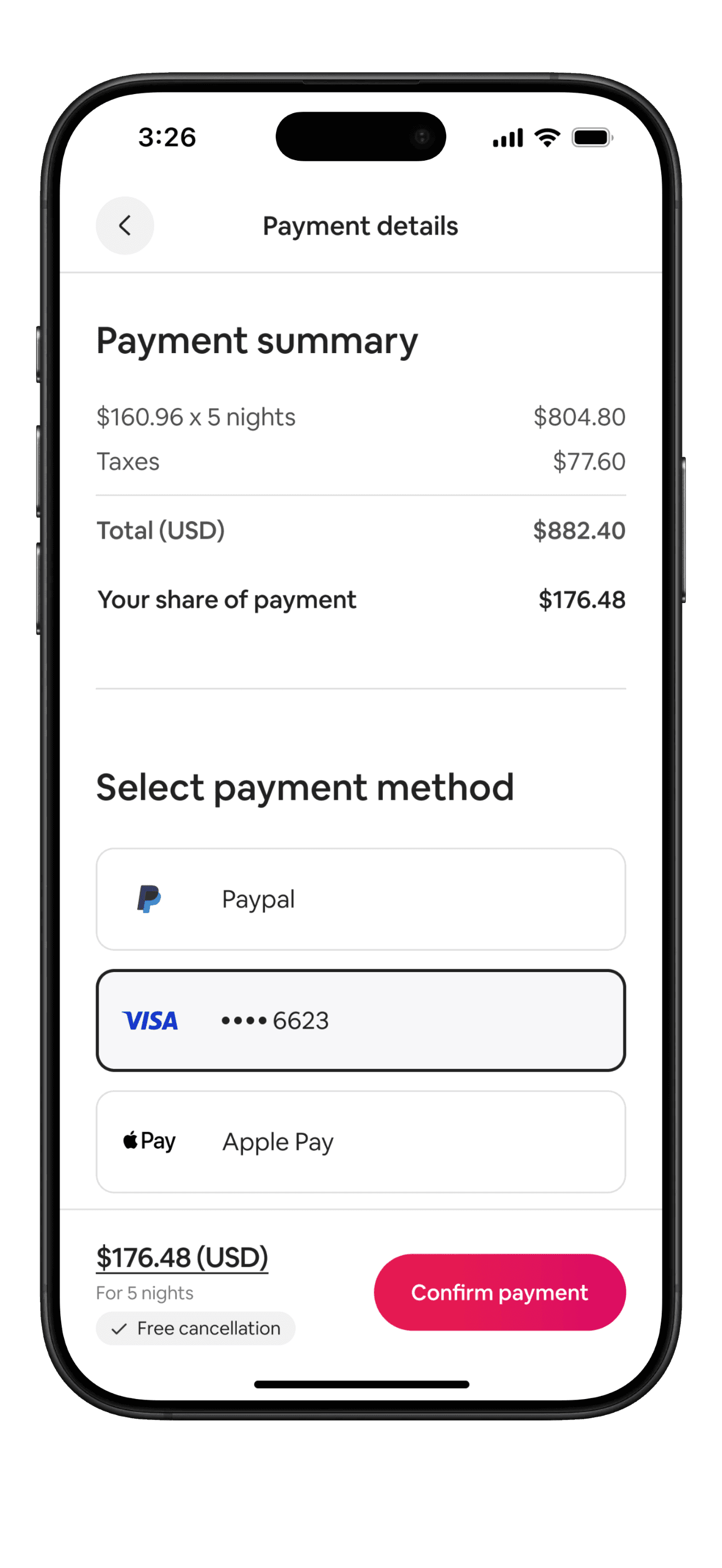
We internalized our initial user feedback and designed a dashboard page where users could manage their group payment. To begin a group payment, users can select the option nestled seamlessly withinAirbnb's existing checkout flow, which triggers a booking hold.
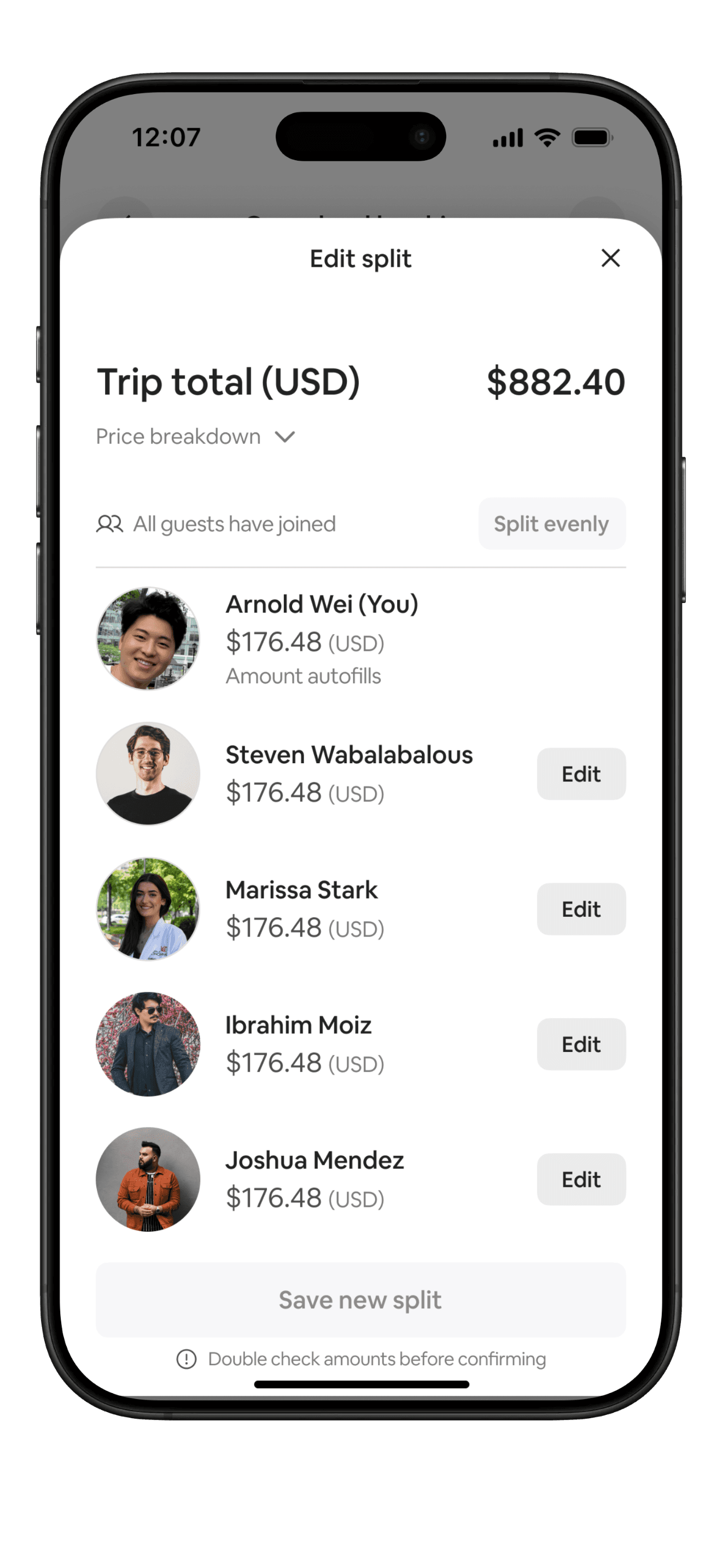
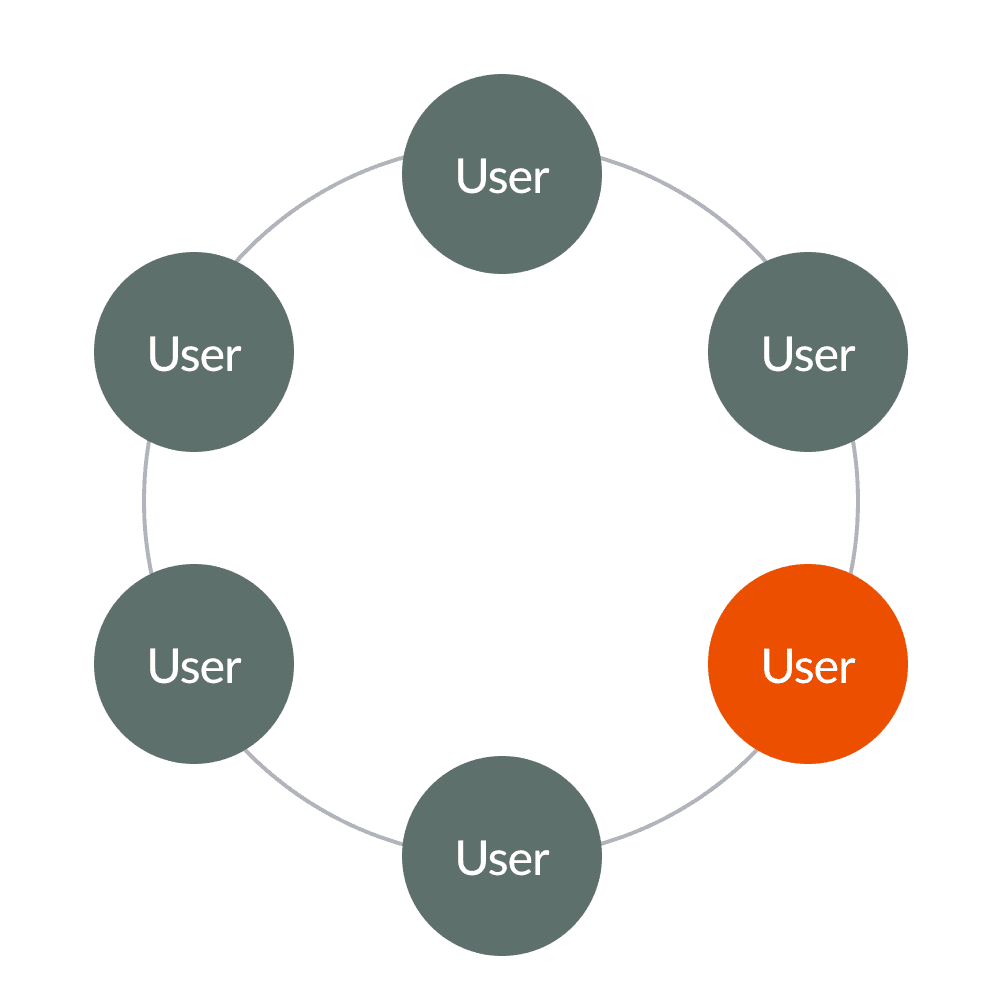
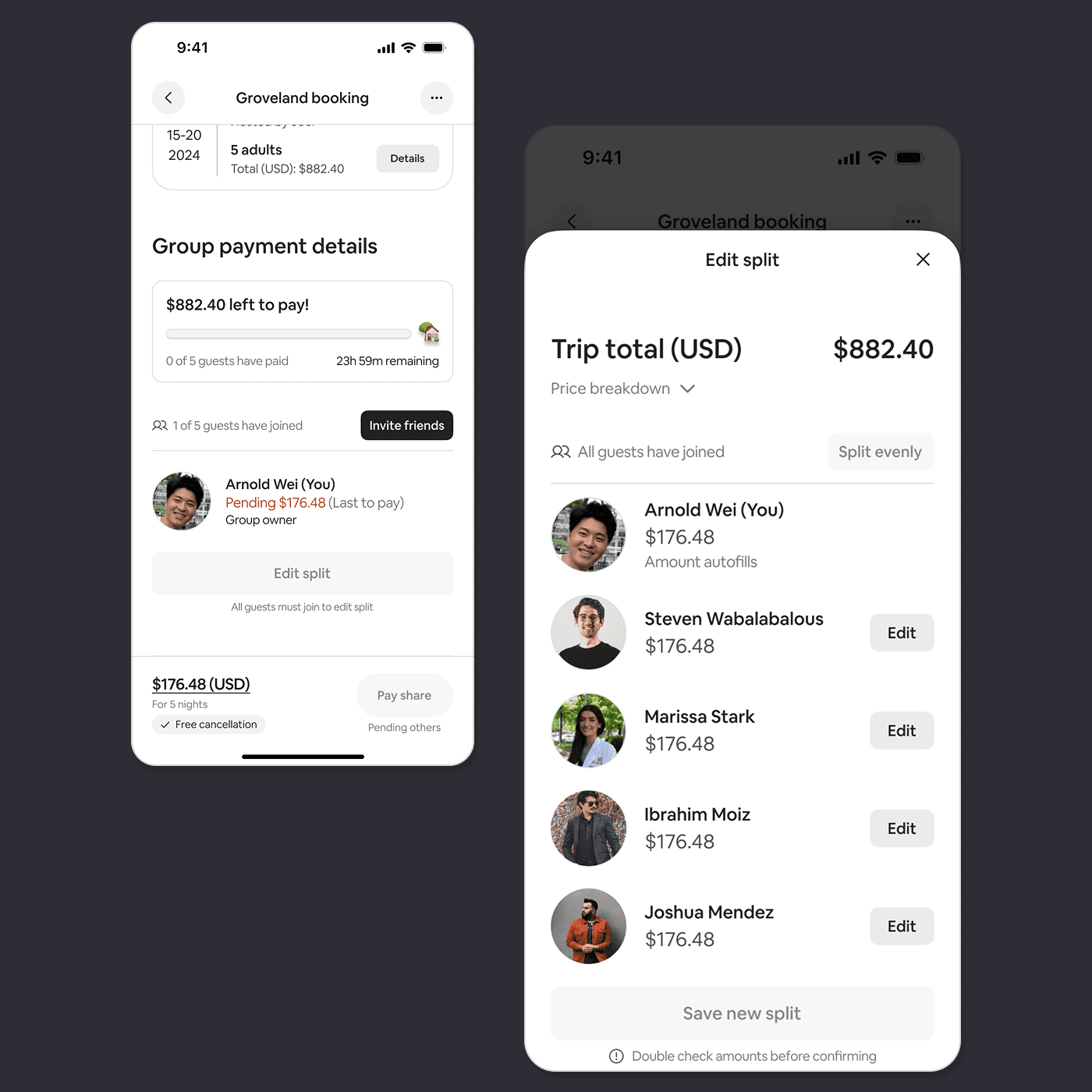
The user who creates the booking becomes the designated "group owner" and has the exclusive ability to invite guests, edit splits, and contact the host. This prevents version control issues and mimics real-life group dynamics we observed through research.
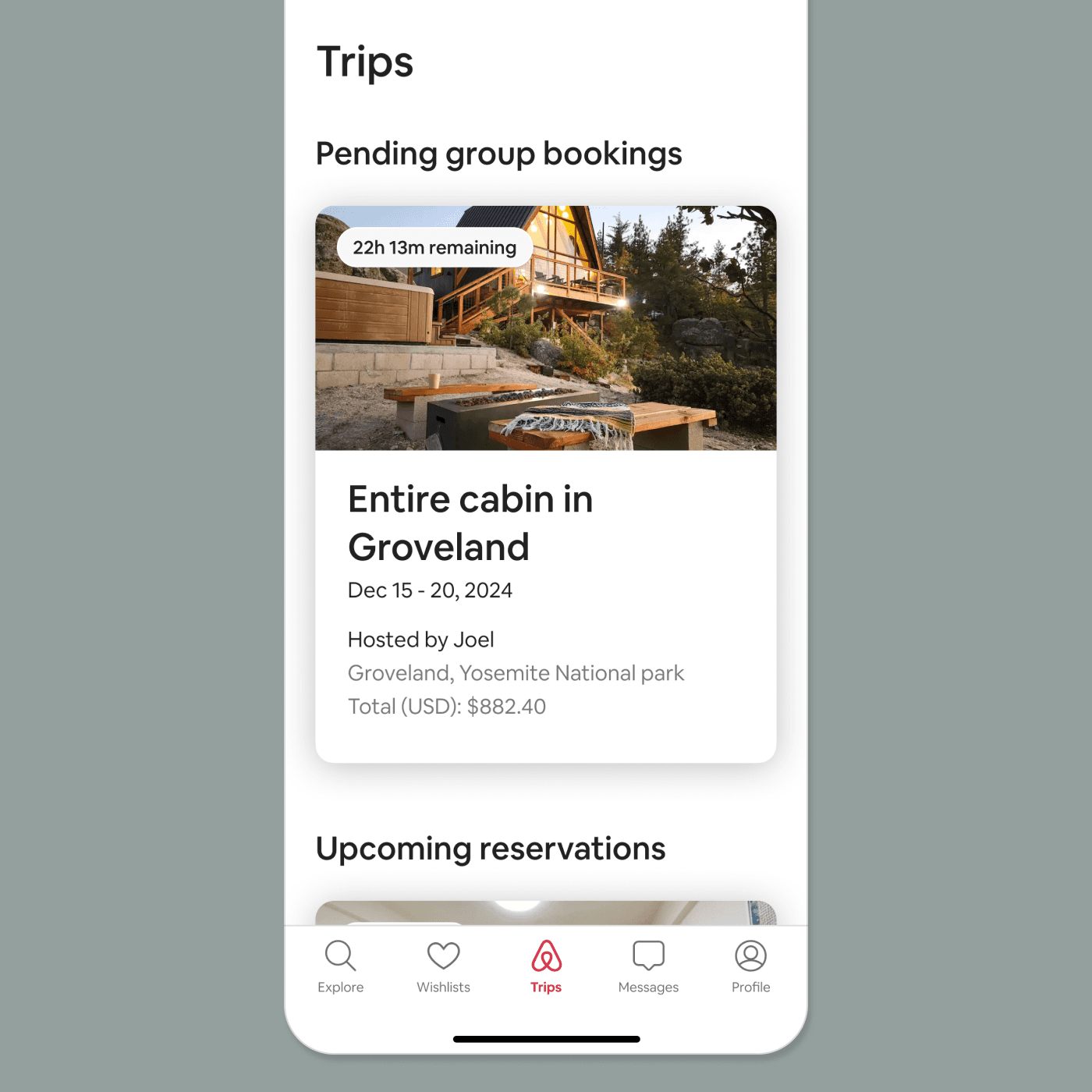
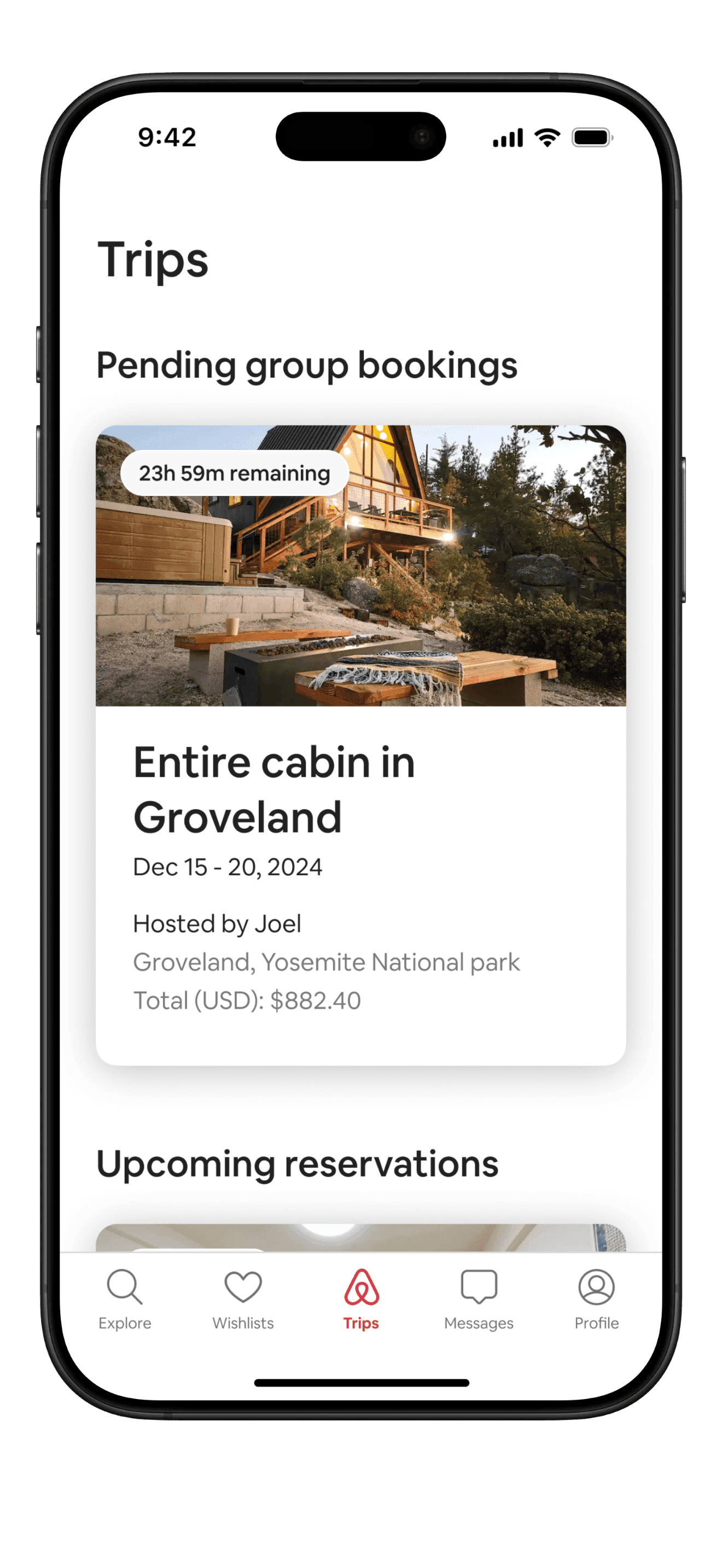
Pending group bookings will sit as the first item within the Trips tab, allowing for easy access for the group owner, as well as seamless integration with Airbnb's existing design architecture.
Studying other group features like Uber Eats, we adopted the logic that the group owner pays last in order to oversee the beginning-to-end booking.
We also placed other edge-case factors onto the group owner. For example, when editing a custom split, the group owner's amount is autofilled, and any remaining pennies after a non-even split goes to the group owner.
1
2
More open-ended survey questions.
Our survey was multiple-choice heavy and looking back, we would have uncovered more useful information to prevent us from going down the wrong path, or bring us towards a new, better path. Ideally, our survey would have benefitted from 1-2 more open-ended questions focused on deeper patterns around group travel, payment splitting, and payback tendencies. However, since open-ended responses take more effort, we would definitely monitor user fatigue and include a completion incentive.
3
4